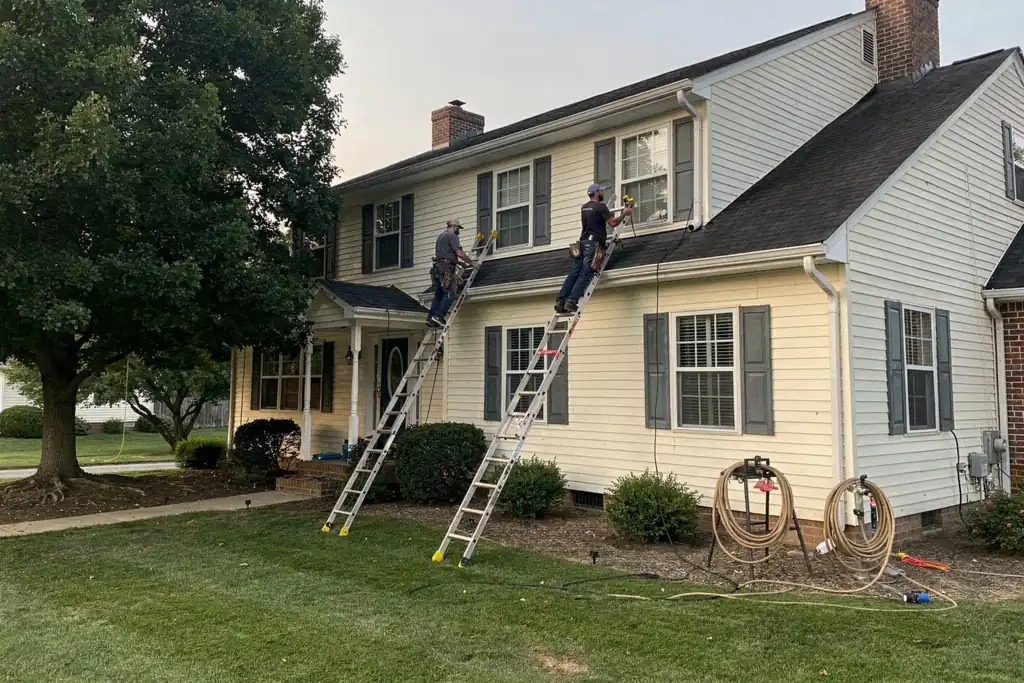
Spring rainfall and sudden downpours in Pearsall, Texas, often send heavy water streaming over clogged channels, threatening foundations and exterior walls. When dirt, oak catkins, and outdoor trash fill the channels, water backs up fast. We perform thorough gutter cleaning across the community to remove packed debris, flush every downspout, and keep water moving properly away from residential structure bases. Our local crews work safely from ladders to ensure your entire roof drainage system handles every local storm.
The housing stock in Pearsall features single-family homes, with detached houses accounting for about 60% of local structures according to the American Community Survey (2020-2024 estimates). With about 73% of residential properties built before 1990, many structures show original fascia boards, older siding, and aging gutter systems. Over time, heavy debris accumulated in old metal or aluminum channels accelerates corrosion and pulls fasteners loose from original wood trim. Older homes with attached carports or long rooflines require routine clearing to protect exterior wood and prevent water spillover near concrete foundations. Proper maintenance prevents water from soaking into historic single-family wood structures during heavy rainstorms.
Pearsall climate conditions mean freezing nights are rare, so ice dams do not form in gutters, and snow is rare. However, regional trees create heavy seasonal debris. Broadleaf live oak trees drop thick leaves in spring rather than fall, while oak catkins, pecan shells, and crape myrtle blossoms fill channels quickly. In winter, ashe juniper pollen settles into a dense residue that turns to thick sludge when wet. Conifers like loblolly pine drop needles, and post oak trees drop leaves that wash down roof pitches. Without regular clearings, this mixed debris blocks downspouts, traps heavy moisture against wood trim, and causes deep overflow problems.
Our complete gutter cleaning service restores proper flow across your entire roofline. We clear every channel by hand, flush lines to remove hidden blockages, and check all structural components before leaving your property.
We offer three tailored schedules for your residential property. A single visit plan works well for homes with minimal tree cover that only need occasional clearings. Our twice a year service, scheduled automatically for spring and fall, serves as the standard option for most homes facing regular live oak leaf drops and seasonal storms. For properties surrounded by heavy tree cover or conifers dropping needles throughout the year, our quarterly plan provides four visits annually, one in each season.
Getting your system cleared starts when you call or submit our website form. We provide a free on-site quote that measures gutter footage, roof height, tree density, and ladder access. Once approved, our crew cleans every channel by hand, scooping out shingle grit and packed dirt into bags. We flush every downspout with water to verify clear drainage, using no high-pressure washers that damage fascia wood or blowers that mess up roofs. After a full walkthrough, the homeowner pays by card, check, or ACH.
You may need professional gutter cleaning if you see rain spilling over channel edges during a storm or plants sprouting from packed soil inside the troughs. Water pooling near your foundation walls indicates a lower downspout clog. From the ground, look for channels sagging downward under heavy weight, or dark streaks running along siding boards where water overflows constantly behind full gutters.
Ignoring blocked channels leads to severe structural water damage over time. Overflowing rain soaks fascia boards, causing hidden wood rot and pulling channel hangers away from the roofline. Heavy standing water can cause basement flooding or crack concrete foundations as soil shifts. Trapped damp organic material also creates ideal breeding spots for mosquitoes, rodents, and other pests near your roofline, while overflowing streams discolor external wall siding.
Total project pricing depends entirely on the overall linear footage of your channels, property height, tree overhang, and structural access. A large two-story house with heavy regional tree cover costs more to clean than a single-story home with clear roof edges. Pricing also reflects whether downspouts require deep snaking to clear thick compacted mud or pine needles. You receive a flat-rate written quote covering all labor before any work starts on your property.
We serve residential properties throughout Frio County, including Pearsall, Dilley, Devine, Charlotte, Natalia, Lytle, Hondo, Cotulla, and Poteet. Our local crews also work in nearby communities such as North Pearsall, Moore, Hilltop, and Yancey.
Live oak trees common to South Texas drop leaves in spring rather than fall. This springtime leaf drop combines with oak catkins to fill channels right before heavy thunderstorm season starts in Pearsall.
Most properties need clearing twice a year in spring and fall. However, homes near heavy stands of live oak or ashe juniper require quarterly clearings to remove seasonal pollen, leaves, and needles.
No, we never use pressure washers that damage fascia wood or leaf blowers that scatter debris. We remove material by hand, bag it, and flush every downspout clean with low-pressure water hoses.
Yes, water spilling over clogged edges drops directly next to your house base. Over time, trapped water erodes surrounding soil, weakens foundation concrete, and leads to costly structural settling issues.
Call TrueEdge Gutter & Fascia at (866) 435-6328 or submit our online form to request your free, flat-rate written estimate today.
Get a free estimate