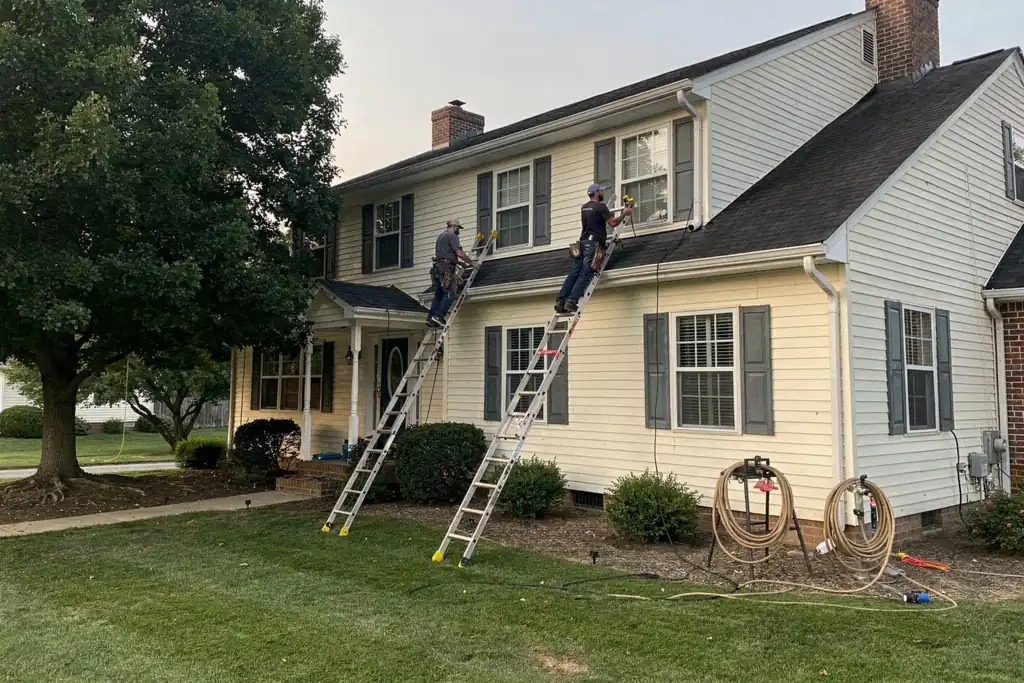
Single-family detached houses dominate Van Alstyne, TX, making proper residential care essential for property values. Over thirty-seven percent of local properties were built before 1990, requiring regular maintenance to prevent costly repairs. We deliver thorough gutter cleaning in Van Alstyne, TX, clearing out trapped debris so rainwater flows smoothly off your roof and far away from your house. Our crew works locally on every residential gutter system across the city, providing a dependable gutter cleaning service designed to protect your home.
The housing layout here features mostly standalone properties, with about eighty percent classified as detached single-family houses according to the American Community Survey, 2020-2024 estimates. Properties in buildings of five or more units account for about thirteen percent of local structures, while roughly twenty-five percent of occupied homes are rented. Older single-family properties, particularly those constructed before 1990, often feature original roofline structures where heavy trapped wet debris causes severe strain. Keeping gutters clear prevents wet weight from pulling framing away from the house. Regular maintenance ensures older fascia stays dry, protecting structural wood beneath the roof edges on these established properties across the neighborhood.
Local weather features freezing nights during winter, though snow is rare and ice dams in gutters do not pose issues. Trees common in the region include broadleaf live oak, pecan, cedar elm, crape myrtle, post oak, loblolly pine, and ashe juniper. Live oak leaves drop in spring rather than fall, while oak catkins and pecan shells fill channels during warmer months. Juniper pollen accumulates during winter, and general leaf drop usually peaks in early November. This steady release of needles, leaves, and pollen creates dense sludge that will clog your downspouts, restricting proper roof drainage and pushing rainwater over the edge onto your foundation.
Our team handles complete gutter cleaning to keep your property safe throughout every season. We remove stubborn blockages by hand and flush out the entire system to ensure uninterrupted water flow during heavy rainfall. Below is a detailed breakdown of everything included with our complete service visit.
We offer three practical plans tailored to your specific canopy coverage. A single visit works best for properties with minimal tree cover that only need occasional care. Our standard option includes twice a year visits in spring and fall, ideal for most properties to handle seasonal drops like early November foliage. For properties surrounded by heavy canopy that drops leaves, needles, and juniper pollen year-round, our quarterly plan provides four scheduled visits to maintain clear gutters and downspouts through every season.
Your service begins when you request a free quote online or over the phone. We review your building height, total footage, and local tree cover before providing an exact written rate. On service day, our crew places tarps around the yard, clears debris by hand without using destructive roof blowers, and flushes downspouts with water. We check for hidden fascia damage, then walk the property with you before accepting payment by card, check, or ACH.
A homeowner can spot several obvious warning signs directly from the ground. Look for water spilling over the edge during rainstorms, active plant growth taking root in accumulated organic matter, or physical sagging from heavy trapped sludge. Streaks on siding or water pooling near your foundation also indicate a severe clog. In spring, heavy oak catkins and dropping live oak leaves quickly fill channels, causing immediate overflow if left uncleaned.
Ignoring a clogged channel creates serious structural issues for your building over time. Rainwater backing up behind trapped organic material causes severe water damage, siding discoloration, and rot along exterior fascia board. Heavy overflow spills straight down to create foundation cracks and basement flooding during intense storms. Standing water in full troughs also attracts unwanted pests and insects, creating breeding grounds right against your roof line that threaten the surrounding home structure.
Total pricing depends on several simple factors specific to your property layout. Overall linear footage and the total number of stories influence job difficulty and labor time. Heavily packed organic material, trapped pine needles, or severe downspout obstructions increase the effort required to restore full flow. Roof pitch and building accessibility also determine crew setup. Choosing a scheduled recurring plan lowers your cost per visit compared to an individual single service call.
We serve homeowners across Anna, Howe, Weston, Tom Bean, Melissa, Dorchester, Whitewright, and Blue Ridge. Our crew also works in nearby communities including Westminster, East Grayson, and Southwest Grayson.
Broadleaf live oak trees common in the region drop their old leaves in spring as new growth emerges. This seasonal drop, combined with oak catkins, fills channels right before heavy spring rains arrive.
Pecan shells, cedar elm seeds, and winter juniper pollen combine with rainwater to create thick sludge. This dense mixture settles into elbow joints, creating a firm clog that stops proper water flow.
No, we clean channels by hand and flush downspouts with standard water hoses. High-pressure washers can strip roof granules and force water behind wooden boards, leading to hidden rot.
We recommend late spring after live oak leaf drops finish, and late fall after the main November foliage drop. This schedule keeps your drainage system fully clear for seasonal storms.
Call (866) 435-6328 today or fill out our simple online form to get your free flat-rate estimate. Protect your home with clean, dependable gutters today.
Get a free estimate