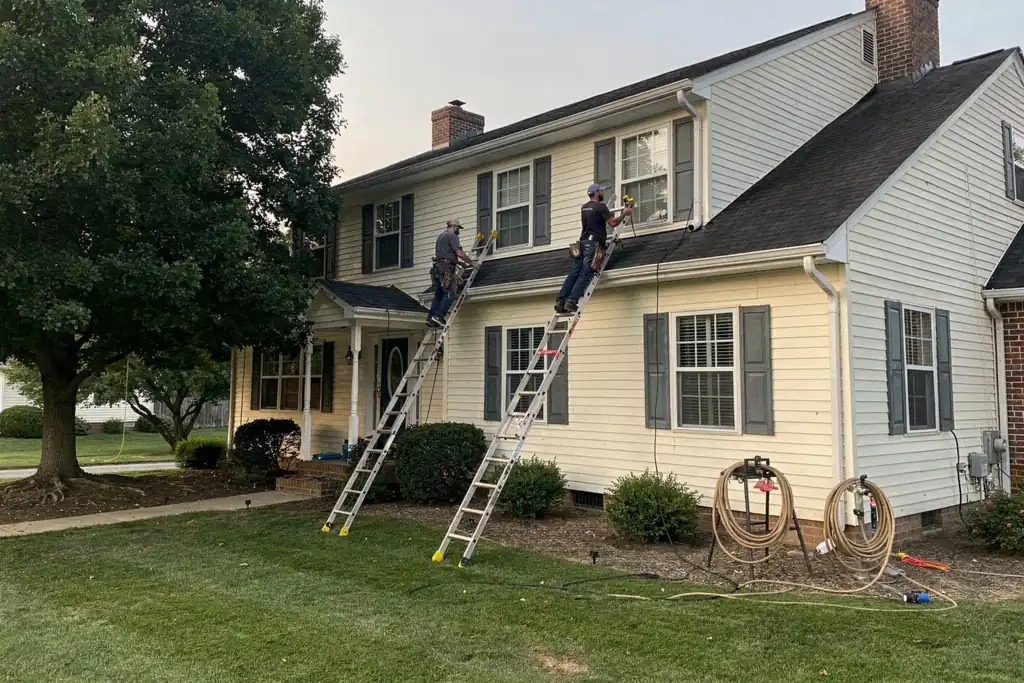
Water cascading over full gutters quickly stains siding, rots trim, and pools around foundation walls. In Philipstown, New York, an overflowing gutter system pushes dampness into basements and causes serious structural troubles. We clear out packed debris to keep water moving smoothly away from your home. Our crew handles thorough gutter cleaning in Philipstown, removing heavy sludge and flushing downspouts so your home stays safe during every rainstorm and winter thaw.
Homes in Philipstown feature varied architectural styles, where detached single-family houses make up about 78 percent of local residences (American Community Survey, 2020-2024 estimates). With about 80 percent of homes built before 1990 and about 29 percent constructed before 1940, older framing and aging wood fascia require steady protection from moisture. About 20 percent of occupied homes are rented, making basic maintenance essential for property values across the community. Traditional wooden trim and historic roof structures suffer when filled channels overflow. Our gutter cleaning service removes damp pine needles and heavy organic build-up before overflow can soak into vulnerable roof lines or weaken original structural elements.
Trees common in the region include red maple, white oak, hickory, tulip poplar, sweetgum, and eastern white pine. Oak catkins fill gutters in spring, while spiky sweetgum balls, acorns, and fallen leaves load down channels later in the year. Leaf drop usually peaks in mid October, sending heavy debris into the gutter system just as cold weather approaches. Freezing nights happen regularly in New York, and snow is likely throughout winter. When trapped debris blocks water flow, winter cold converts trapped moisture into heavy ice dams. These ice blocks pull metal away from the roof edge and crack frozen seam joints during repeated freezing thaws.
A proper cleaning keeps water moving freely off your roof and away from your foundation wall. We perform complete gutter cleaning to remove all blockages and secure proper drainage across your entire roofline.
We offer three distinct plans for ongoing care. A single visit works well for homes with minimal tree cover that only need occasional care. Our standard option includes twice a year visits in spring and fall, which works best for standard suburban properties managing regular seasonal leaf drop. For properties under heavy regional tree cover that drops needles, sweetgum balls, and leaves throughout the year, our quarterly schedule provides four visits annually. Each plan delivers systematic clearing to protect your home from sudden rain overflow.
Scheduling starts when a homeowner submits our simple form or calls our office directly. We evaluate your property access, story height, overall footage, and surrounding tree density to provide a flat estimate. Our crew cleans out all channels by hand, avoiding leaf blowers on your roof or harsh pressure washers that damage wood fascia. We snake each downspout until water runs clear, inspect every corner for hidden damage, and complete a final walkthrough before accepting payment.
You may need gutter cleaning if you notice overflow in rain or see weeds growing directly inside the channel. Water pooling at the foundation indicates a severe downspout clog below the roofline. Heavy sagging from the weight of wet fall leaves or heavy oak catkins signals that trapped debris is pulling metal away from the house, putting your structure at risk before freezing weather arrives.
Ignoring full gutters causes widespread water damage, basement flooding, and costly foundation cracks as heavy rain spills over the edges. Overflow rots wood fascia along the roof line, loosening metal fasteners and destroying paint. Standing water and decaying organic material also attract pests, creating breeding grounds for insects right against your siding. Cleaning your gutters routinely prevents wet build-up from freezing into ice, protecting your entire property year after year.
Total service costs depend primarily on the linear footage of your roofline, the height and story count of the building, and overall site accessibility. The density of nearby regional trees and the amount of packed debris affect how long clearing takes. Unusually thick sludge or severe downspout blockages require extra labor to clear properly. Choosing an annual schedule lowers your cost per visit compared to ordering single emergency service calls after heavy fall storms.
We serve properties throughout Philipstown and surrounding Putnam County communities. Our team works in Cold Spring, Nelsonville, Highland Falls, Putnam Valley, Cornwall-on-Hudson, Highlands, Beacon, and Fishkill. We also provide service to nearby communities including Fort Montgomery, Firthcliffe, West Point, and Lake Mohegan.
Houses in Philipstown surrounded by mature oaks or maples usually need service twice a year. A clearing after spring catkins finish dropping and another after peak fall leaf drop keeps water flowing freely into downspouts.
Yes, trapped water expands as it freezes during cold Philipstown nights. This expansion creates ice dams, bends metal channels, pulls fasteners away from fascia boards, and splits seams open along the roofline.
No, we never use pressure washers or roof blowers. We clear debris out by hand and flush lines with standard hoses to protect historic fascia boards, delicate trim, and underlying structural wood from water force.
You can pay by card, check, or ACH. Payment is collected only after the crew finishes the walkthrough and you are satisfied with the cleaned gutters and downspouts.
Call (866) 435-6328 today or complete our simple online form to receive your free, flat-rate estimate for local property service.
Get a free estimate