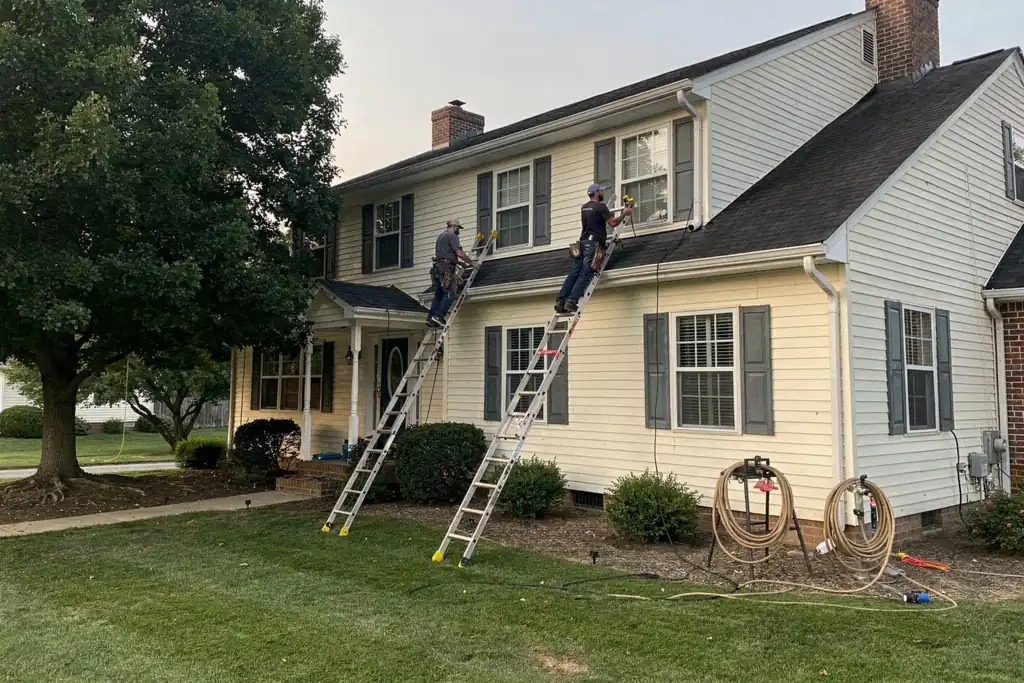
Uncontrolled rain and melting snow can wash away landscape beds, rot wood fascia, and soak foundations around Harvard, Massachusetts properties. When gutters fill with debris, water spills over the edges and drains straight down exterior walls. We clear clogged gutters and downspouts across town to protect your home from costly exterior moisture problems. Our family-owned company cleans gutters using hand tools, clears downspouts thoroughly, and hauls away all collected debris, ensuring every gutter system drains freely.
Single-family detached structures make up about 86% of residential buildings in Harvard, Massachusetts (American Community Survey, 2020-2024 estimates). Older structures are common throughout the community, with about 75% built before 1990 and 16% constructed prior to 1940. These older homes often feature complex rooflines, broad roof sections, and tall wood fascia boards that require regular maintenance. Neglected gutters on these single-family structures allow overflowing water to run behind siding, soak wood frames, and ruin historical finishes. Professional gutter cleaning prevents water overflow from damaging older trim, preserve structural framing, and keeps water flowing safely to proper drainage areas around the yard.
Regional trees like sugar maple, red maple, American beech, white birch, northern red oak, eastern white pine, and eastern hemlock drop debris throughout the year. Broadleaf tree leaves drop heavy blankets every fall, while pine needles and maple seed wings clog gutter troughs during spring and summer months. Peak leaf drop usually occurs in early October, filling gutters right before winter freezes begin. Freezing nights and winter snow put heavy stress on blocked gutters. Trapped water freezes solid, generating ice dams that damage roof shingle edges and bend gutter hangers. Regular maintenance removes dense debris before winter freezes turn blocked water into heavy ice.
Our residential gutter cleaning service clears accumulated leaves, pine needles, and grit from roof line channels to keep runoff moving safely. Every scheduled visit includes clearing the troughs, clearing the downspouts, and carrying away all collected debris.
We offer three flexible plans for local properties. A single visit works well for homes with minimal tree canopy that only need occasional maintenance. Our standard twice a year schedule includes spring and fall visits, which suits most homes surrounded by regional broadleaf trees. A quarterly plan provides four visits each year for properties surrounded by dense eastern white pine trees or heavy foliage that drops needles, leaves, and seed wings across every season. Each option helps prevent clog formation and keeps your home protected from overflowing water.
A homeowner begins by submitting our simple estimate form. Our team visits the site to calculate a flat-rate estimate based on footage, roof height, tree cover, and ladder access. On job day, our crew cleans out the trough debris by hand, using no roof leaf blowers or pressure washers that could strip shingle grit or damage fascia. We flush every downspout with water, inspect the gutter system for sagging or loose hardware, walk the property with you, and accept payment only after you are satisfied.
You may need professional gutter cleaning if rain pours over the side during summer storms, or if small plants start growing inside the gutter line. Packed debris forces water down siding and leaves dark spill stains along wood trim. Ground level signs include small washouts near the foundation or gutters visibly sagging under the wet weight of accumulated leaves and pine needles. Noticing these warning signs early protects your siding from serious water damage.
Delaying maintenance creates serious long-term structural risks for your house. Heavy clog buildup blocks downspout openings, causing water damage along roof edges, fascia rot behind the gutter, and soaked wall insulation. In winter, trapped water forms heavy ice dams that lift shingles and split gutter seams. Downward spillovers can cause basement flooding, foundation cracks, and pooling water that attracts unwanted pests to wet wood around your foundation.
Total service costs vary based on home size, total linear footage, roof height, gutter access, and total debris density inside the trough. Larger multi-story houses require longer ladders and more setup time than small single-story designs. Heavily packed pine needles or matted oak leaves also take extra time to clean out by hand. Minor damage or detached downspouts noted during work can affect overall project scope, though our written estimate guarantees a firm price before cleaning work begins.
We serve residential properties in Harvard, Worcester County, and neighboring places including Boxborough, Ayer, Bolton, Lancaster, Littleton, Shirley, Stow, and Groton. Our local crews also work in nearby communities such as Devens, Littleton Common, South Lancaster, and West Concord.
Homes in Harvard with heavy white pine canopy benefit from our quarterly plan. Pine needles drop throughout the year, so four visits help keep downspouts open and downspouts clear before winter freezes arrive.
Leaf drop in Harvard usually peaks in early October. Falling maple and oak leaves quickly block downspout outlets, trapping fall rain that can freeze solid and create winter ice dams along roof lines.
No, we never use pressure washers or roof blowers. Pressure washers can strip granules off roof shingles, gouge soft wood fascia, and force dirt, leaves, and water under sensitive roof edges.
We accept payment by card, check, or ACH. You only pay after our crew completes the final walkthrough with you and confirms you are satisfied with the completed work.
Call TrueEdge Gutter & Fascia today at (866) 435-6328 or fill out our quick online form to request your free, flat-rate estimate.
Get a free estimate