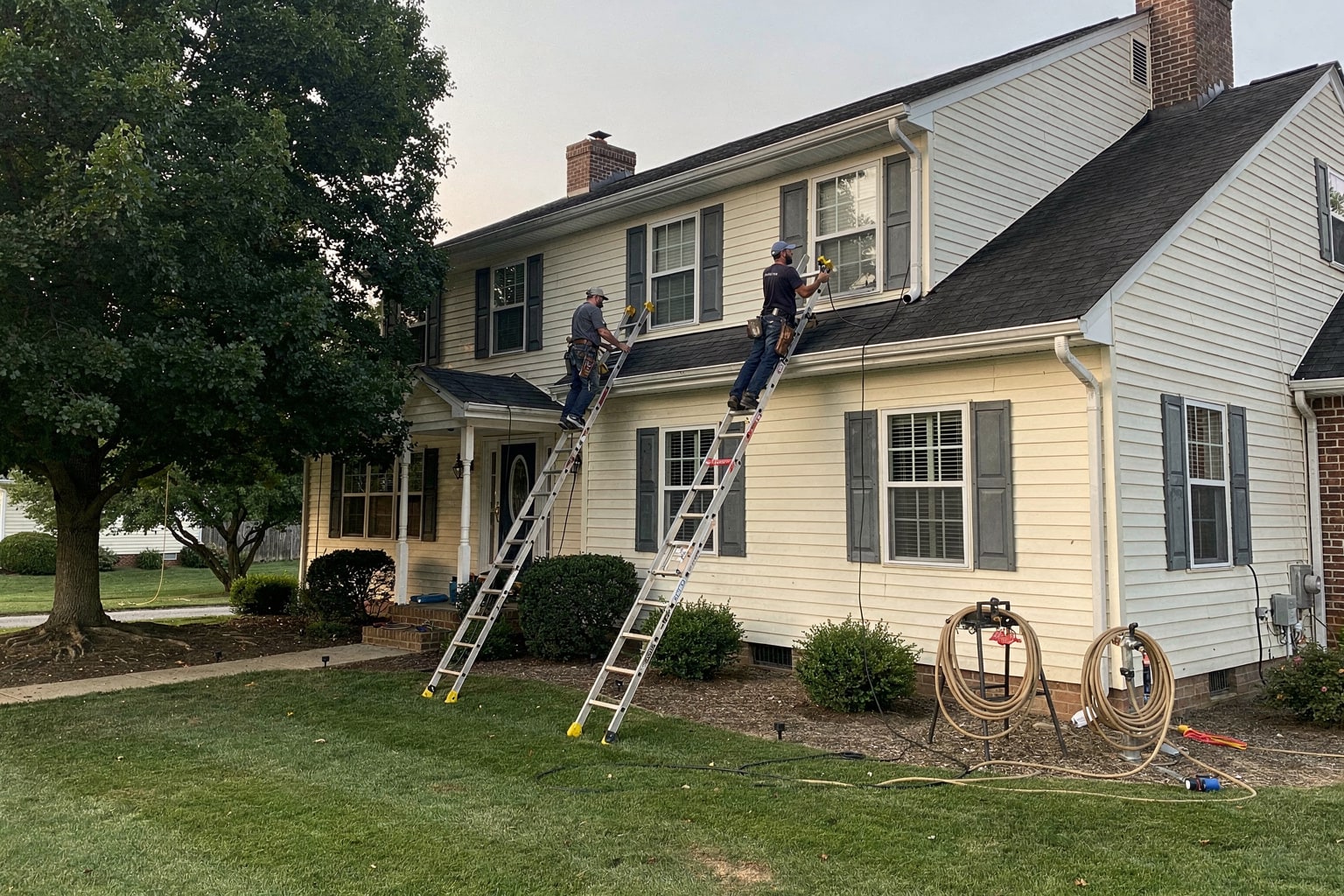
Chicago's freeze-thaw cycles are brutal on gutters. Ice dams form along the roofline, water backs up behind clogged guards, and.
Chicago's mix of mature oaks, maples, and ash trees dumps leaves into gutters from late September through November, and that's just the start. Pine needles from nearby landscaping work their way in year-round, while spring thunderstorms and the heavy snowmelt that follows create surges of debris and water that clog unprotected gutters fast. Add in the freeze-thaw cycles Chicago gets over 100 times a year — the gutters expand and contract, opening seams and joints where debris gets stuck — and you've got a recipe for constant cleaning or water damage to your foundation and roof.
Gutter guards in Chicago stop that cycle. They keep the leaves and pine needles out while letting rainwater flow freely, so you're not climbing a ladder every other month or dealing with ice dams that back water under your shingles come winter.
The best feedback on gutter guards in Chicago comes from customers who've lived through a full year with them — they've seen how guards handle leaf season, survived the freeze-thaw cycles that crack unsealed seams, and watched them work during spring thunderstorms when the gutters get hammered.
Here's what they're telling us.
Mark R., 60611: "I installed gutter guards three years ago and haven't touched a ladder since. Chicago's freeze-thaw thing was destroying my old gutters every winter. The guards keep the debris out, and the water still flows like it should. Worth every penny."
Jennifer and Paul T., 60614: "We got tired of cleaning gutters twice a year. The first fall was the real test — we had pine needles everywhere, and they just stayed on top of the guards. Second winter, ice built up on the roof but not inside the gutter system. That's the difference we needed."
David K., 60640: "Had a contractor install them during a spring rain. Watched the water flow test myself. No pooling, no overflow. It's been two seasons now and the gutters are still clean. I don't think about them anymore, which is exactly what I wanted."
We give every gutter guard installation a free estimate and walk you through what to expect during Chicago's rough weather seasons. If you want to talk to someone who's actually installed them and seen how they hold up, call us.
For a typical Chicago home with 150 to 200 linear feet of gutter, you're looking at $1,200 to $2,500 installed, depending on the guard type and whether you're adding new gutters or protecting existing gutter systems. Brush guards run cheaper. Reverse curve guards and screen guards cost more because they require professional installation and better materials to handle Chicago's heavy spring thunderstorms and snowmelt. We give you a flat-rate free estimate before any work starts, so you know the exact number.
It depends on the type and what's falling. Chicago gets pine needles, oak leaves, shingle grit, and lake-effect snow loading. Brush guards catch bigger debris but let small debris and pine needles slip through. Reverse curve guards use surface tension to keep water flowing while blocking most leaves, and they handle snowmelt better when freeze-thaw cycles hit. Screen guards stop leaves but clog faster with small debris. We recommend reverse curve for Chicago homes because our winters and springs throw everything at your roof, and you need gutter protection that handles all of it.
Most quality gutter guards come with a lifetime warranty on the guard itself against defects and material failure. That covers cracks, peeling, and seam separation. It does not cover damage from ice dams, improper installation, or neglect. Some warranties are transferable if you sell. Always ask what's covered in writing before installation—we give you the warranty details on your estimate so there's no surprise later.
Includes a free inspection of your current gutters. No cost, no obligation.
Get a free estimate