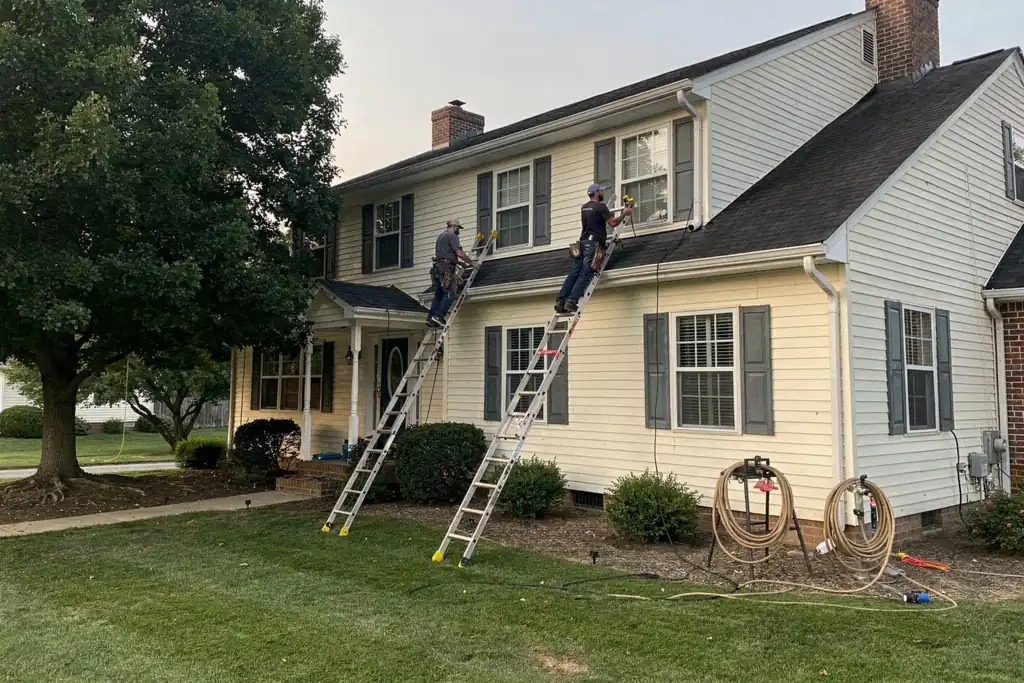
When heavy rain spills over clogged troughs, water flows straight down the siding and pools along the foundation. Over time, standing moisture causes severe water damage and weakens structural footings. A clear drainage path stops this hazard before it ruins building materials. We provide full gutter cleaning in Jerseyville, Illinois to keep water moving off roofs safely. Our family-owned crews clear trapped organic buildup, flush downspouts completely and ensure your home stays dry through every storm.
Jerseyville features a rich mix of residential properties, where about 86 percent of housing units are detached single-family structures (American Community Survey, 2020-2024 estimates). Older structures dominate the local landscape, with approximately 75 percent constructed prior to 1990 and roughly 20 percent dating back before 1940. These older structures often feature complex rooflines, original wooden fascia boards and aged gutter hardware that require careful handling. Additionally, with about 30 percent of homes occupied by renters, reliable upkeep protects long-term property values. Regular maintenance on these established properties keeps rooflines stable, protects exterior surfaces and prevents wet debris from rotting original woodwork.
Trees common in the region include broadleaf sugar maple, red maple, bur oak, hickory, American elm, white pine and spruce. Fallen leaves, heavy maple seed wings, acorns and pine needles drop continuously onto roofs, with leaf drop usually peaking in mid October. When seasonal decay fills the troughs, local winter weather makes matters worse. Freezing nights happen regularly throughout Illinois winters, causing trapped dampness to freeze into solid ice. These heavy ice dams stress metal hangers, force seams apart and push water under shingles. Regular gutter cleaning service removes packed organic matter before freezing temperature cycles create heavy ice dams that pull gutters away from the roofline.
Our crew clears your entire roof perimeter by hand to restore full water flow. We remove heavy wet debris, test downspout drainage and check all hardware before we finish the job. Every visit follows set steps to ensure your property remains neat and fully protected. The full list of included tasks for your house is detailed below.
We offer three tailored schedules to manage seasonal drop. A single visit works well for properties with light tree cover that only need an occasional clearout. The standard plan schedules twice a year maintenance, coming once in spring and once in fall, which fits most residential homes near mature trees. A quarterly plan provides four visits a year for properties with heavy tree cover that drops broadleaf foliage and pine needles year-round. Selecting a recurring schedule ensures consistent service while helping protect your home from overflow.
The process begins when a homeowner calls or submits our online form. We provide a free on-site estimate that measures gutter footage, counts building stories, evaluates nearby trees and checks property access. When work starts, our crew cleans all channels by hand without leaf blowers or high-pressure washers that damage fascia boards. We flush each downspout until water flows clear, then conduct a final walkthrough with you before collecting payment by card, check or ACH.
A clogged system shows clear warning signs from the ground. Look for rain water spilling over trough edges, visible plant growth sprouted in trapped dirt or standing puddles near foundation walls. Heavy organic matter also causes visible sagging along roof lines, especially after fall oak leaves soak up rain or winter snow. Spotting these signs early prevents permanent damage to exterior surfaces and keeps roof drainage running freely.
Delaying simple maintenance allows wet debris to trap moisture against wood fascia. Over time, recurring overflow leads to serious foundation cracks, fascia rot, ruined siding and severe water damage inside lower walls. Excess water around basement walls increases the threat of basement flooding during heavy spring downpours. Leaving organic material packed inside gutters also creates wet nesting spots for pests right against your roof edge.
Total service costs depend on several specific property details noted during our initial review. Total linear footage, building height, roof pitch and overall accessibility influence how long the job takes. The volume of trapped debris and whether a downspout clog needs snaking also impact the work required. Joining a recurring schedule reduces individual visit rates compared to a single service call. The specific pricing tiers for local residential properties are printed directly below.
We serve residential properties throughout Jerseyville and nearby communities across Jersey County. Our service area includes Kane, Otterville, Fidelity, Fieldon, Medora, Grafton, Brighton and Elsah. We also work in the surrounding communities of Jersey, Mississippi, English and Otter Creek.
Leaf drop usually peaks in mid October across Jerseyville, filling channels with oak leaves and pine needles. Clearing this matter before freezing nights happen prevents ice dams from forming during severe winter cold snaps.
Local trees drop broadleaf foliage, acorns, pine needles and seed wings straight onto roofs. In Jerseyville, this mixed debris packs tightly in troughs, leading to a heavy clog if left uncleaned through wet spring months.
No, we clear all channels by hand and bag the debris. High-pressure washers can strip paint, gouge wood fascia and force unwanted moisture behind exterior siding.
Payment is collected only after our crew finishes the walkthrough and you are fully satisfied. We accept cards, checks or ACH transfers for your convenience.
Call (866) 435-6328 today or fill out our quick online form to request your free flat-rate quote. We will measure your property and schedule your service promptly.
Get a free estimate