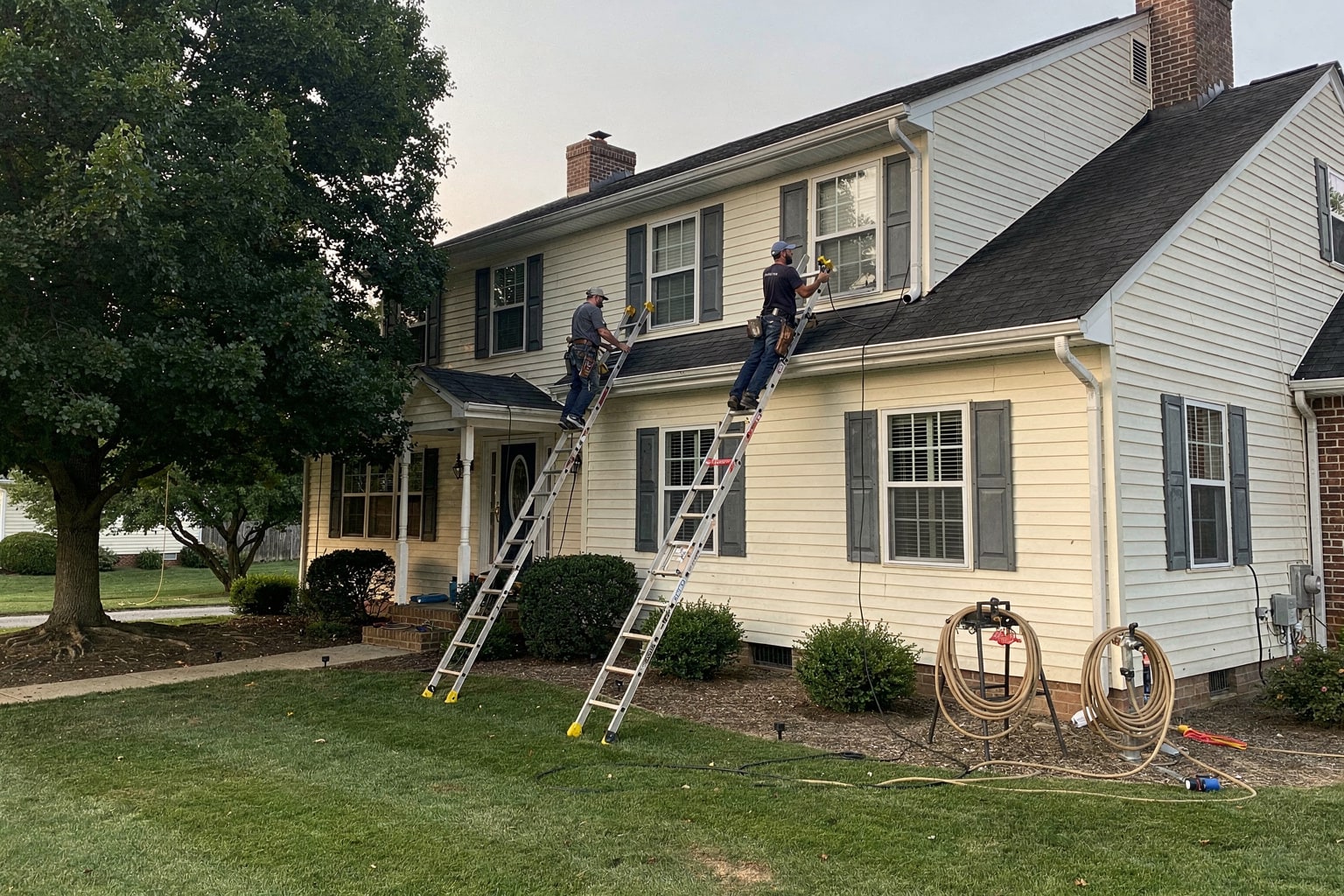
Those spring thunderstorms and winter freeze-thaw cycles hit DC hard.
DC's mix of oak, maple, and ash trees sheds leaves hard in fall, and spring brings pine needles from nearby areas that clog gutters fast. Add the city's heavy summer thunderstorms and nor'easters that dump snow and ice, and you're looking at gutters that fill up quick and freeze solid in winter. Gutter guards in Washington help keep that debris out while letting rainwater flow freely, so you're not cleaning gutters every other week or dealing with ice dams and water damage when the thaw comes.
The best feedback on gutter guard installation comes from customers who've lived with them through a full year in Washington — that means surviving the heavy spring thunderstorms, the freeze-thaw cycles that stress gutter seams, and the pine needles and debris that pile up come fall. They can tell you what actually works when it matters.
Marcus and Jennifer Chen installed gutter guards on their Capitol Hill home two years ago. "We used to spend every October cleaning gutters," Marcus said. "Now we get a free estimate call in the spring, maybe once a year, and that's it. The guards handle the summer storms without pooling, and we haven't had water damage near the foundation since."
David Rodriguez, a property manager in Dupont Circle, oversees eight rental units. "I was skeptical about the cost," he told us. "But after one winter with nor'easter snowmelt and spring rain, I saw zero clogs across all eight buildings. The professional installation made the difference — proper pitch, no gaps. I've already scheduled guards on three more properties."
Keisha Williams on U Street had brush guards installed three years back. "My gutters were clogged every six weeks before," she said. "Now I don't think about them. The warranty gives me peace of mind, and honestly, the curb appeal is better too."
Most DC homeowners spend between $1,200 and $2,800 for professional installation of gutter guards on a standard two-story house. The price depends on your home's linear footage, the type of guard you choose, and whether you're protecting existing gutters or installing new ones. Get a free estimate from a local crew — they'll walk your roof line and give you a flat-rate quote before any work starts.
Yes, but you need the right kind. Washington gets heavy summer thunderstorms and nor'easters that dump pine needles, oak leaves, and shingle granules into gutters. Brush guards and reverse curve guards handle pine needles better than screen guards, which clog faster with small debris. Surface tension guards work well here too, but they need professional installation to function properly in DC's freeze-thaw cycles.
Most gutter guard systems come with a lifetime warranty on materials and workmanship, though some cover only 10 to 25 years depending on the manufacturer. The warranty protects against defects and typically covers clogs caused by debris — but not damage from ice dams or improper installation. Read the fine print before you buy, because coverage varies. A reputable crew will explain exactly what you're protected for and for how long.
Includes a free inspection of your current gutters. No cost, no obligation.
Get a free estimate